

Commitment to a Sustainable Campus
Our Vision: A Sustainable, Efficient, Safe, and Environmentally Responsible Campus for Future Generations.
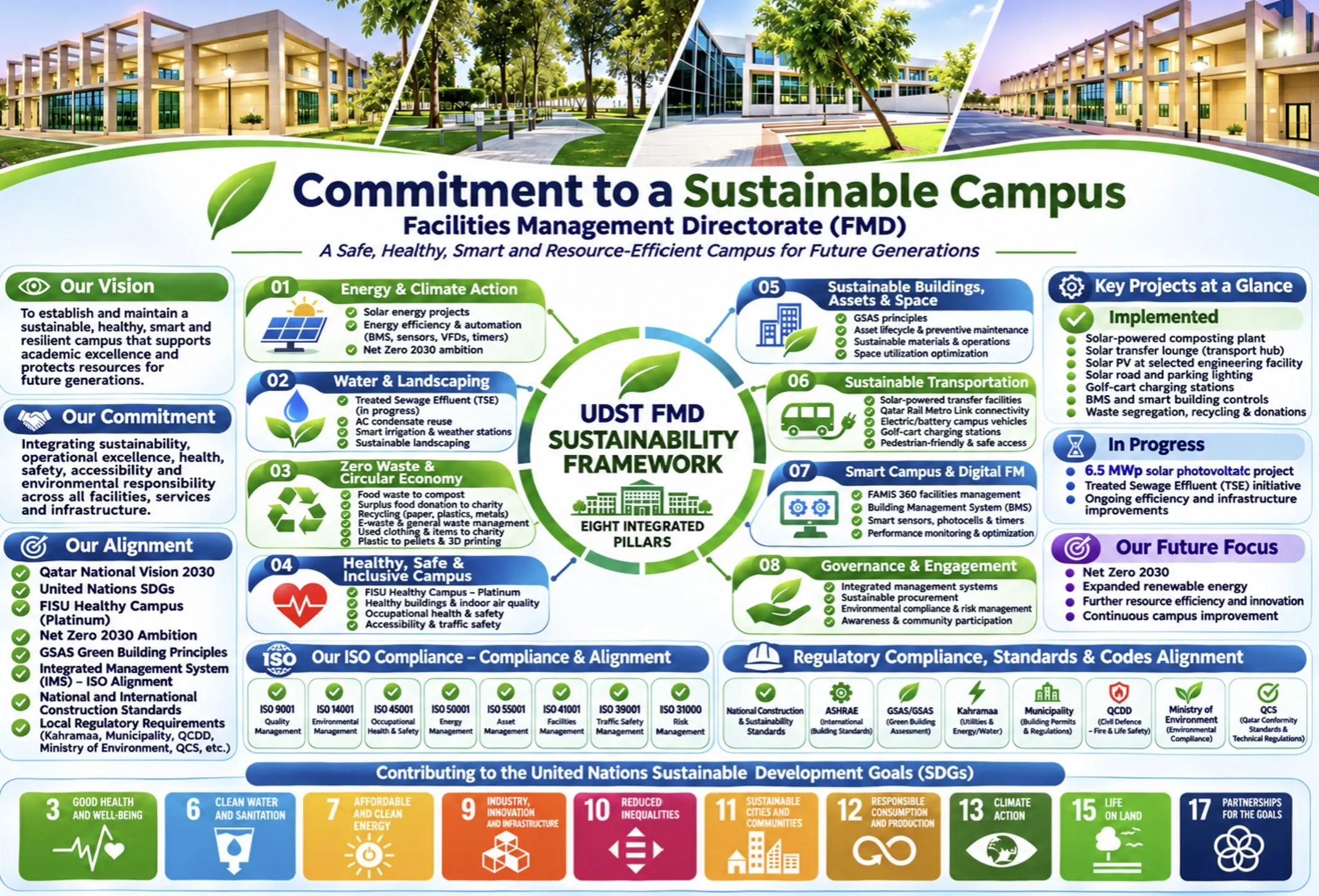
Our Key Sustainability Focus Areas:
Sustainable Food Services and Food Waste Management
FMD promotes responsible campus food services by encouraging food waste monitoring and reduction, supporting sustainable food choices, including vegetarian and vegan options, and promoting the availability of healthy, nutritious, and affordable meals across campus dining facilities
Food scraps & organic materials will be collected & processed into compost, contributing to soil enrichment and reducing greenhouse gas emissions.
Water Conservation and Sustainable Landscaping
FMD promotes sustainable water management through water consumption monitoring, conservation measures, water-efficient building practices, sustainable landscaping, and feasible water reuse initiatives to enhance resource efficiency and campus sustainability.
All irrigation systems are equipped with automated control timers based on the data from the weather station to ensure optimized irrigation. Water consumption is continuously monitored and recorded throughout the year to track irrigation usage and promote efficient water management.
Energy Efficiency and Sustainable Building Operations
FMD supports energy-efficient campus operations through effective facilities maintenance, Building Management Systems (BMS), energy consumption monitoring, and continuous optimization of building performance. The Directorate also encourages energy-saving technologies and sustainable solutions to minimize energy consumption and operational environmental impacts.
The Professional Skill Center (Building 33) demonstrates its commitment to sustainable practices by incorporating solar power as a notable source of energy. Harnessing the abundant sunlight available, the building is equipped with state-of-the-art solar panels that boast an impressive average energy yield of 1500 kilowatt-hours (kWh).
This solar energy initiative not only underscores the institution's dedication to environmental responsibility but also plays a pivotal role in reducing the overall carbon footprint of the facility. The University will regularly assess and upgrade our infrastructure to incorporate energy-efficient technologies and practices. The University will actively explore and invest in renewable energy sources such as solar, wind, and geothermal to reduce our carbon footprint and promote clean energy generation.
Accessible, Safe, and Sustainable Campus Infrastructure
FMD is committed to promoting a safe, accessible, and environmentally responsible campus through pedestrian-friendly infrastructure, inclusive accessibility, sustainable facility planning, and the integration of environmental considerations into campus development and improvement projects.
All internal roads and driveways are equipped with appropriate safety signage to ensure the safety of both pedestrians and vehicle users, promoting a secure, accessible, and user-friendly campus environment. The University provides well-maintained, hygienic, and accessible washroom facilities, along with safe and clean drinking water at designated points across all indoor and outdoor campus areas. These facilities are made available to all students, staff, and visitors free of charge.
Waste Management and Responsible Resource Utilization
FMD encourages responsible waste management through waste reduction, segregation, recycling, monitoring, and appropriate disposal practices. The Directorate promotes efficient material utilization and coordination with authorized waste management service providers to minimize environmental impacts.
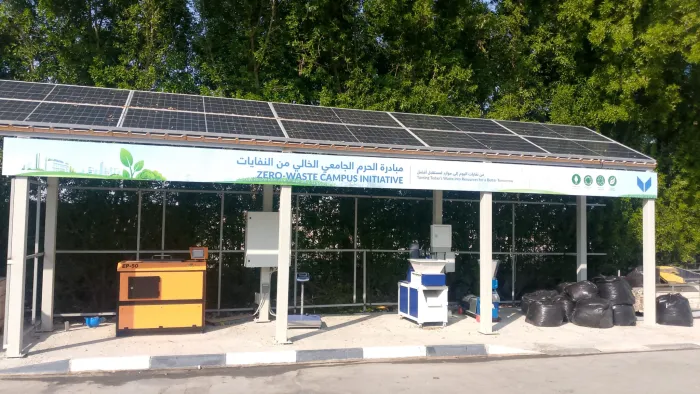
Our Compost plant converts food waste into useful compost which is used in our campus for vegetation. Every day, the housekeeping staff assembles leftover food from the cafeteria and transports it to the composting facility. Over a period of 6 days, they amass an average of 35 kilograms of food waste per day. The composting facility functions with the aid of a 5-kilowatt solar power system, which guarantees its self-sufficiency in terms of energy. On the 7th day, a greater quantity of compost, averaging 80 kilograms, is harvested from the facility. Importantly, the composting facility functions without producing any emissions, demonstrating its commitment to eco-friendly methods. Recent enhancements include the installation of plastic shredding and pelletizing machines, which process plastic and other recyclable waste materials into pellets which are subsequently converted into filaments for 3D printing applications, supporting research projects and promoting sustainable waste management through material reuse and recycling. University provides clean and easily accessible bins in key locations for the separation of waste into categories, including recyclables, organic waste and non recyclables.
Energy Monitoring and Carbon Reduction
FMD supports initiatives aimed at reducing the environmental footprint of university operations through energy performance monitoring, improved operational efficiency, low-carbon energy considerations, and sustainable maintenance practices that contribute to long-term environmental responsibility. These efforts also include the use of battery-powered club cars for campus mobility, helping reduce direct emissions and supporting more sustainable transportation.
Together, these initiatives contribute to energy conservation, carbon reduction, and long-term environmental responsibility. In alignment with Qatar National Vision 2030, the university provides access to the Metro Link service, partially powered by solar energy, encouraging public transport use and reducing individual vehicle dependency and carbon emissions.
Responsible Water Discharge and Environmental Protection
FMD promotes responsible wastewater and water discharge management by considering applicable environmental standards, water quality requirements, and operational practices aimed at preventing pollution and protecting surrounding ecosystems. All wastewater generated on campus is discharged into the main municipal sewer network, ensuring disposal while preventing land contamination and pollution of stormwater or common drainage systems. Stormwater is collected and channelled through designated drainage systems and rainwater soakaway wells, facilitating its infiltration into the ground and contributing to groundwater recharge.
- Biodiversity Protection and Sustainable Land Management
FMD encourages biodiversity conservation and responsible land management through environmentally conscious campus planning, sustainable landscaping, green-space management, appropriate waste disposal, and the integration of ecological considerations into infrastructure development. The university prioritizes planting native and climate-adapted species, such as Sidra, Date Palm, Neem, Cassia fistula, and Plumeria, to promote local biodiversity, reduce water consumption, and support sustainable landscaping.
Our Approach to Continuous Improvement
The Facilities Management Directorate continuously seeks opportunities to improve environmental performance, optimize resource utilization, and strengthen sustainable practices across university facilities.
Through proactive facilities management, responsible infrastructure planning, operational monitoring, and stakeholder collaboration, FMD aims to support UDST's long-term vision of a sustainable, resource-efficient, environmentally responsible, and resilient campus.