

SDG 12: Responsible Consumption and Production
Leading Sustainability Efforts by Hosting Sustainable Organic Waste Management and Zero-Waste Innovations Symposium
JANUARY 2025
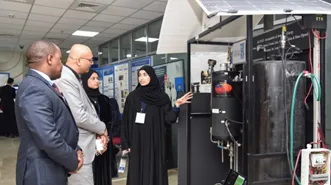
The University of Doha for Science and Technology (UDST) hosted the Sustainable Organic Waste Management and Zero-Waste Innovations Symposium in collaboration with the UK Foreign Commonwealth and Development Office (FCDO). The event highlighted UDST’s advancements in sustainable waste management and showcased research on composting, Bokashi fermentation, AI-driven compost maturity prediction, and zero-waste community integration. The symposium brought together researchers, industry experts, and policymakers to explore innovative approaches to waste reduction and sustainability. It also celebrated UDST’s achievements since 2019, including introducing Bokashi composting to Qatar and implementing decentralized waste-to-compost systems. The initiative reflects UDST’s commitment to sustainability and collaboration toward achieving a zero-waste future.
UDST and Dolphin Energy empower student innovation on sustainability through hackathon
JULY 2025
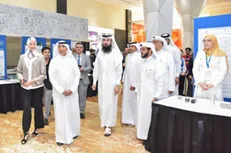
The University of Doha for Science and Technology (UDST), in partnership with Dolphin Energy, hosted the Zero Waste Hackathon as part of its commitment to becoming a Zero Waste Campus by 2027. Organized by the College of Engineering and Technology, the event brought together 23 shortlisted student teams to pitch innovative waste management solutions following a sustainability-focused bootcamp. The initiative emphasized applied education, industry collaboration, and student-driven innovation. UDST President Dr. Salem Al-Naemi and Dean Dr. Awni Al-Otoom highlighted the university’s dedication to environmental responsibility, real-world learning, and the integration of sustainability into its operations. The hackathon marked a major step in UDST’s Zero Waste Initiative, reinforcing its leadership in applied research, environmental stewardship, and student empowerment.
UDST students’ research highlights benefits of black soldier fly farming
APRIL 2025
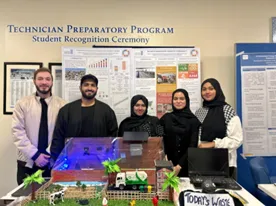
The BSF (Black Soldier Fly) project by UDST students focuses on transforming organic waste from markets, restaurants, and food industries into valuable resources such as high-protein animal feed and organic fertilizer. By reducing landfill waste, promoting resource efficiency, and enabling sustainable production practices, the project aligns primarily with SDG 12 – Responsible Consumption and Production. Beyond waste management, it contributes to environmental sustainability, economic resilience, and job creation, while offering a scalable solution that supports circular economy principles and encourages sustainable practices in agriculture and food systems.
SDG aligned Projects
- Carbon Quantum Dots (CQDs) Synthesis from Biochar Derived from Food Waste: A Continuous Path to Sustainability from Waste to Wealth
- Application of Circular Economy and Cleaner Production Principles for Environmental Sustainability: Evidence from the Qatari Hospitality Sector
The Club Festival: Recycling for a Greener Future
SEPTEMBER 2024
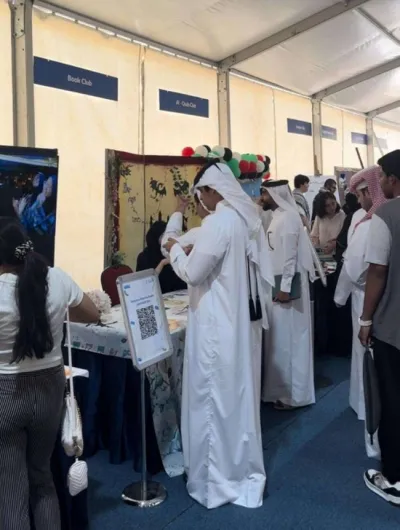
UDST Club Festival 2024 aligned with SDG 12, focusing on sustainability and waste reduction. Held twice during the year, it showcased recycled materials in decorations and activities. The event emphasized the importance of responsible consumption and production, inspiring attendees to adopt eco-friendly practices and reduce environmental impact.
Aligning with the United Nations Sustainable Development Goals (SDGs) and Qatar Vision 2030, the festival served as a dynamic platform for students to demonstrate how small actions can lead to substantial impacts. The theme not only showcased the clubs’ ingenuity but also highlighted the University’s dedication to fostering a culture of sustainability across campus.
Each booth was a testament to the power of collaboration and environmental consciousness. From repurposed pop bottles, paper and plastics to upcycled fabrics and eco-friendly displays, the festival was a vivid reminder of the possibilities that arise when creativity meets purpose. These student-led initiatives underscored the importance of sustainability in our everyday lives, reflecting a global movement towards responsible consumption and production.