



Dr. Davide Taibi, LEGO® Chair/Professor
Head of SDU Vejle Campus Research Centre for Computer Science and AI
Head of SustainAI - Sustainable AI-Driven Software Engineering
University of Southern Denmark, Vejle, Denmark
Davide Taibi is the LEGO® Chair in Software Architecture, Professor at the University of Southern Denmark, Vejle, and head of the SustainAI group. His research focuses on AI for cloud and edge software architectures, including cloud-native technologies, microservices, serverless computing, software quality, and architectural technical debt, with the aim of developing more reliable, scalable, and sustainable software systems.
https://www.taibi.it/

KC ‘Casey’ Santosh, PhD
Professor, AI
Chair, Department of Computer Systems Engineering Technology
Chair (interim), Department of Applied Computing & Geomatics
Director, Center of Excellence in Applied Computing
College of Engineering, Technology and Management
Oregon Institute of Technology (Oregon Tech) | Oregon’s Polytechnic University
KC “Casey” Santosh is Director of the Center of Excellence in Applied Computing, Professor of AI, and Chair of the Departments of Computer Systems Engineering Technology and Applied Computing & Geomatics at Oregon Institute of Technology. Previously, he served at the University of South Dakota as Chair of Computer Science (2020–2026), Graduate Program Director (2017–2024), and Founding Director of AI Research (2015–2026), following more than four years of research appointments at the National Institutes of Health and LORIA Research Center in France. He holds a PhD in Computer Science (Artificial Intelligence) from INRIA Nancy Grand Est/Université de Lorraine, France. His work has secured approximately $10 million in funding from agencies including NSF, ED, and DOW. He has delivered more than 100 international keynote presentations, including a TEDx talk, and authored 13 books and over 280 peer-reviewed publications, including articles in IEEE TPAMI, IEEE TMI, and IEEE TAI. He has also served as an NSF reviewer and panelist and in editorial and review roles for prestigious journals, including IEEE TAI and IEEE TMI. He has contributed to NIST’s AI Standards and Innovation group and participated in the U.S. Department of State’s U.S. Speaker Program on AI and AI education. More information: www.kc-santosh.org

Dr. ir. Joaquin Vanschoren
Mathematics and Computer Science Department
Eindhoven University of Technology, Netherlands
Dr. ir. Joaquin Vanschoren is an Associate Professor at the Eindhoven University of Technology. His research focuses on understanding and democratizing AI to build learning systems that help humanity. He performs leading work on making AI more accessible, turning insights into more automated and efficient AI methods, and thoroughly benchmarking their real-world performance and safety. He founded and leads OpenML.org, initiated and chaired the NeurIPS Datasets and Benchmarks track, co-chairs the MLCommons Working Group on AI Safety evaluation, is editor-in-chief of DMLR, and action editor for JMLR. He won the Dutch Data Prize, an Amazon Research Award, and several paper awards. He gave over 30 invited talks, was tutorial speaker at NeurIPS and AAAI, and authored over 200 papers and the reference book on AutoML (with 1M downloads). He contributed to discussions at the Royal Society and OECD and is a founding member of the European AI networks ELLIS and CLAIRE.

Professor Ali Ouni
École de Technologie Supérieure (ÉTS)
Université du Québec, Montreal, QC, Canada
Bio. Ali Ouni is a Full Professor at École de technologie supérieure (ÉTS), Université du Québec, Montréal, where he leads the Software Technology and Intelligence Research Group (STIL). His research focuses on software maintenance and evolution, software quality, and empirical software engineering, with particular emphasis on applying advanced artificial intelligence techniques to improve software products, development processes, and developer productivity. He has published over 150 peer-reviewed articles, including numerous contributions to leading software engineering journals and conferences. His research has earned several Best and Distinguished Paper Awards, as well as the IEEE TCSE 10-Year Most Influential Paper Award at ICPC 2021. In 2024, he received the Outstanding Early Career Computer Science Researcher Award from CS-Can/Info-Can. He earned his Ph.D. from the University of Montreal, where he received an Excellence Research Award. He also served as an area editor for Version 4 of the Guide to the Software Engineering Body of Knowledge (SWEBOK), published by the IEEE Computer Society in 2024. He is an IEEE Senior Member.
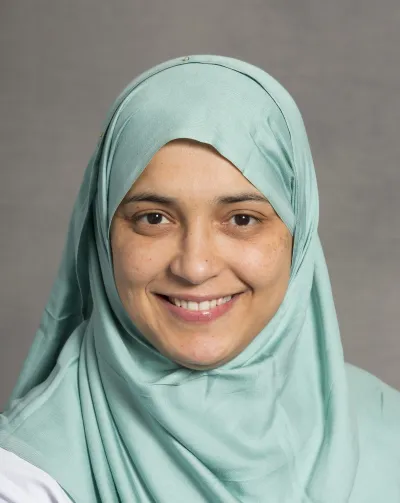
Dr. Ghita Kouadri Mostefaoui
Department of Computer Science
University College London, London, UK
Ghita Kouadri Mostefaoui is an Associate Professor (Teaching) in the Department of Computer Science at University College London (UCL) where she also serves as Programme Director for the MSc in Computer Science. Her research work focuses on context systems, digital health, artificial intelligence and best practices in Higher Education teaching & learning with a research portfolio that bridges technical innovation and societal impact. Her publications span IEEE conferences, Springer volumes and international journals. Her work has been cited widely reflecting her influence across subfields of computing. Dr. Ghita holds a Doctorate from Pierre et Marie Curie (Paris VI) a postgraduate qualification from EPFL, Switzerland and an Engineering degree from the University of Blida, Algeria. She is also an Associate Fellow of the Higher Education Academy (AFHEA). At UCL Dr/ Ghita is recognised for her commitment to excellence, curriculum design and the development of inclusive future focused computing education. She leads initiatives that enhance student experience strengthen digital learning ecosystems and support the transition of learners from backgrounds into advanced study in computer science. Fluent in Arabic, French and English she brings a perspective to both teaching and research and her work aligns with global priorities, in innovation, infrastructure and sustainable digital transformation.

Maram Assi, PhD
Senior AI Scientist, Agentic AI
Oracle Cloud Infrastructure, NY, USA
Dr. Maram Assi is a Senior AI Scientist at Oracle Cloud Infrastructure (OCI), where she develops agentic AI and large language model–based systems for enterprise cloud infrastructure. Her work focuses on reliable and scalable AI agents, including planning and reasoning, multi-agent interaction, and rigorous evaluation for real-world systems.
Before joining Oracle, Dr. Assi was an Assistant Professor of Computer Science at Université du Québec à Montréal (UQAM). Her research bridges artificial intelligence and software engineering, developing LLM-based approaches that support software maintenance, evolution, and developer productivity. She has published in leading peer-reviewed venues, including EMNLP, ACM Transactions on Software Engineering and Methodology, and Empirical Software Engineering.
Dr. Assi earned her PhD in Computer Science from Queen’s University as a Vanier Canada Graduate Scholar and holds both bachelor’s and master’s degrees in Computer Science from the Lebanese American University. With experience spanning academia and industry, including earlier software-engineering roles in supply-chain and banking systems, she is passionate about translating research advances into impactful, dependable AI systems.
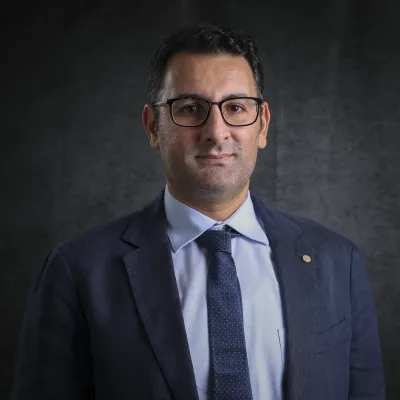
Dr. Ilyes Jenhani
Assistant Professor, Software Engineering
University of Doha for Science and Technology (UDST) , Qatar
Dr. Ilyes Jenhani joined the University of Doha for Science and Technology (UDST) in 2025. He previously held academic positions at Efrei Panthéon-Assas University in France, Prince Mohammad bin Fahd University in Saudi Arabia, Tunis El Manar University, and the University of Tunis in Tunisia. He received his PhD in Computer Science from the University of Artois, France, in 2010.
His research lies at the intersection of Artificial Intelligence and Software Engineering, with particular interests in AI-assisted software engineering, machine learning, natural language processing, and large language models (LLMs). His work has explored the application of AI to several software engineering problems, including software change and commit classification, software defect and bug analysis, and duplicate bug report detection. His recent research focuses on the use of LLMs in software engineering, including prompt quality and prompt-smell detection, multi-model approaches, and the reliability of AI-generated solutions.
A long-standing theme of his research is reasoning under uncertainty, particularly the modeling and management of uncertainty in machine learning using possibility theory. His work spans both theoretical and applied research, with an increasing focus on developing reliable and uncertainty-aware AI techniques for software engineering.

Prof. Dr. Amila Akagic
Professor
University of Doha for Science and Technology (UDST), Qatar
Prof. Dr. Amila Akagic is currently a Full Professor in the College of Computing and IT at the University of Doha for Science and Technology. Dr. Akagic's current research focuses on computer vision and machine learning, with particular emphasis on synthetic data generation and evaluation, image and signal analysis, and learning from multimodal and sensor data. Her recent work explores generative AI for creating and augmenting visual data, methods for assessing the quality and usefulness of synthetic datasets, and efficient AI approaches for real-world perception tasks. She is also exploring neuromorphic computing and spiking neural networks for event-based visual processing.
Dr. Akagic received her bachelor's and master's degrees in electrical engineering from the University of Sarajevo, followed by a Ph.D. from Keio University in Japan. Her academic development included international research experience in the United States and Japan, supported by prestigious Fulbright and MEXT scholarships.